
California’s roads are among the busiest in the nation, and pedestrians face constant danger when sharing space with cars, trucks, and buses. The California Office of Traffic Safety (OTS) reports that the state’s pedestrian fatality rate is almost 25% higher than the national average. With thousands of injuries and fatalities each year, understanding pedestrian right-of-way laws is not just about safety; it is about protecting your rights after an accident.
Accidents can still occur even when you follow the rules. Drivers may ignore traffic laws, or confusion about right-of-way can lead to dangerous situations. At Salamati Law, we help injured pedestrians by holding negligent drivers accountable and pursuing fair compensation for your losses.
What Are California Pedestrian Right-of-Way Laws?
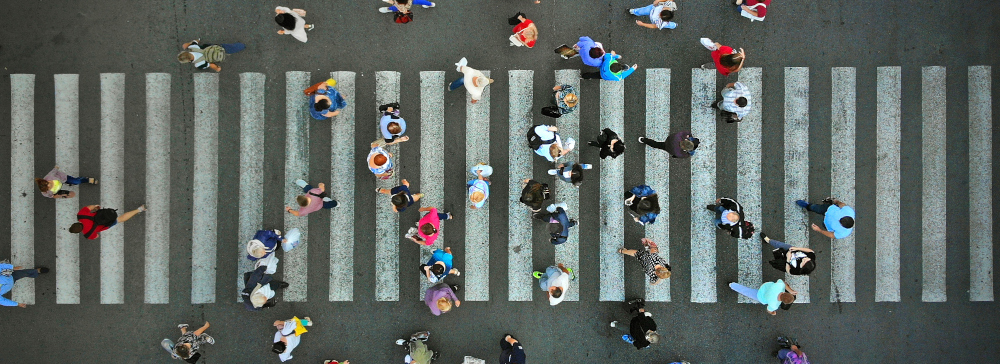
California law is designed to protect pedestrians, but it also sets clear responsibilities for drivers and people on foot:
Crosswalks – Marked and Unmarked
California Vehicle Code § 21950 requires drivers to yield to pedestrians crossing in a marked or unmarked crosswalk at an intersection. By law, nearly every intersection includes a crosswalk — even if it isn’t painted — making pedestrian right-of-way protections broader than many drivers realize.
Drivers’ Legal Duties
Drivers have a legal duty to keep pedestrians safe, which includes:
- Slowing down or stopping to allow people to cross safely.
- Exercising due care. Drivers cannot speed up to beat a pedestrian to the crosswalk or ignore their presence.
- Staying alert at all times, especially at night, during bad weather, or poor visibility.
If a driver fails in any of these duties and you are injured, you may have a strong claim for compensation.
Pedestrians’ Duties
The law protects pedestrians, but it also expects reasonable care. That means you should:
- Avoid stepping suddenly in front of a vehicle that has no reasonable opportunity to stop.
- Cross promptly and avoid unnecessarily delaying or obstructing traffic in a crosswalk.
When Pedestrians Do Not Have the Right-of-Way

There are circumstances where pedestrians are required to yield:
- Crossing mid-block (outside a crosswalk): Pedestrians must let vehicles pass if they are close enough to be an immediate hazard.
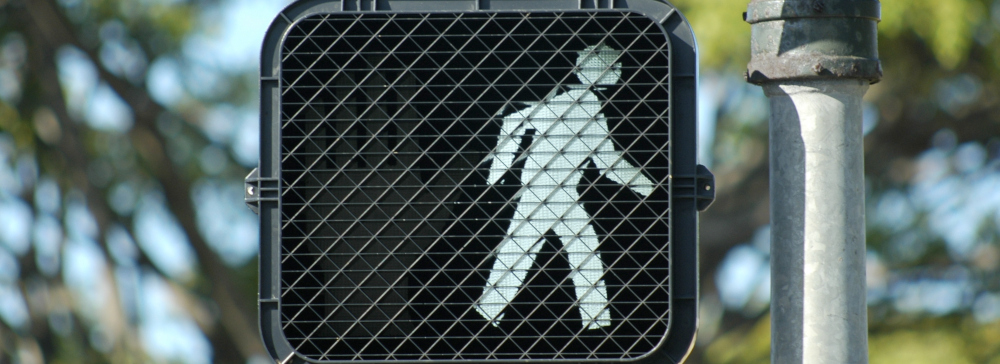
- Ignoring traffic signals: Entering during a “Don’t Walk” sign is illegal. However, once a pedestrian is already in the crosswalk, drivers must wait until they reach safety.
- Jaywalking: As of 2023, the Freedom to Walk Act decriminalized safe jaywalking. Pedestrians may legally cross outside of crosswalks if there is no immediate danger. That said, using designated crossings remains the safest practice.
Situations That Require Extra Caution
While the basic right-of-way rules cover most crossings, specific locations and scenarios require extra attention. Understanding them can help you recognize when a driver is clearly at fault and strengthen your case if an accident occurs.
Sidewalks and Driveways
Pedestrians generally have the right-of-way on sidewalks. Drivers entering or leaving driveways, alleys, or parking lots must also yield. Accidents in these areas often involve limited sightlines, making driver negligence easier to prove.
Blind or Visually Impaired Pedestrians
Pedestrians using a white cane or guide dog have absolute right-of-way. Failing to yield is considered a misdemeanor and can strengthen civil claims.
School Zones and High-Risk Areas
Near schools, bus stops, and playgrounds, pedestrian protections are stricter. Drivers are required to exercise heightened caution and comply with reduced speed limits. Violations in these areas often carry significant legal consequences.
Interaction With Bicycles, Scooters, and Skateboards
While skateboards and roller skates are treated as pedestrians, bicycles are generally not granted the same protections. This distinction matters in accidents involving multi-use paths or shared roadways.
Proving Fault in Pedestrian Accidents

Insurance companies frequently argue that the pedestrian was partially at fault, claiming they suddenly stepped out into traffic, crossed mid-block, or ignored signals.
In pedestrian accident claims, the outcome often hinges on the quality and preservation of evidence. Collecting objective, verifiable documentation quickly can be the difference between a denied claim and a substantial recovery.
Key evidence that strengthens your case includes:
- Video — traffic cams, security, or doorbell footage (often overwritten quickly).
- Event Data Recorder (EDR) — vehicle “black box” data on speed, braking, and impact.
- Photographs — of vehicle damage, debris, crosswalk markings, and lighting conditions.
- Police and 911 records — Include official crash reports, diagrams, and initial responder observations.
- Medical records — immediate and ongoing treatment that links the injury to the crash.
- Witness statements and timelines — contemporaneous accounts are powerful.
- Expert reports — can include accident reconstruction, biomechanics, and life-care plans for long-term losses.
At Salamati Law, we use this evidence in negotiations with insurance companies and in court if litigation becomes necessary. Under California’s pure comparative negligence rule, even if a pedestrian is partially at fault, the driver can still be held liable for their share of the damages.
Through careful evaluation of the available evidence and a well-planned legal approach, we ensure your claim reflects the true circumstances of your accident and positions you to pursue the maximum recovery you deserve.
Schedule a Free Consultation Today

If you’ve been injured in California, understanding pedestrian right-of-way laws is just the first step. Protecting your legal rights requires an experienced advocate who knows how these laws apply to fight for fair and reasonable compensation for your losses. Do not wait—call today for a free consultation and get the guidance you need from an experienced Los Angeles pedestrian accident lawyer who puts pedestrian rights and your recovery first.